

Urban landfills serve as disease reservoirs and pollution epicenters, affecting surrounding communities through multiple pathways. Our comprehensive research investigates landfill-linked health impacts, examining the prevalence of infectious diseases in populations within 2-3 kilometers of major landfill sites. We document elevated rates of respiratory infections from airborne particulate matter and toxic gases, gastrointestinal diseases from leachate-contaminated groundwater used for drinking and irrigation, and vector-borne diseases from mosquito breeding grounds in stagnant wastewater. Using multi-method approaches—household health surveys, environmental monitoring of air quality parameters, water sampling to track groundwater contamination gradients for heavy metals and persistent pollutants, and soil analysis to document agricultural land contamination—we reveal the full scope of landfill impacts. This research is critical because rising temperatures accelerate decomposition and the release of volatile compounds, intense rainfall mobilizes leachate over wider areas, and extended warm seasons prolong vector breeding, thereby compounding health risks. Our findings inform intervention strategies, including scientifically determined buffer zones, mandated engineering controls such as impermeable liners and gas collection systems, and transitions toward integrated waste management that emphasizes source segregation, recycling, composting, and waste-to-energy technologies to minimize landfill dependence.
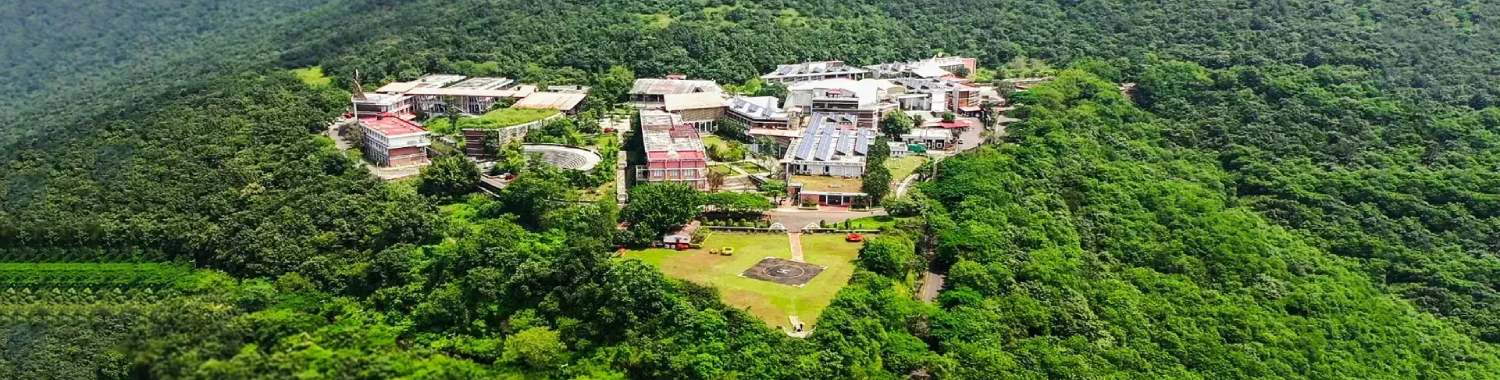
The 350-acre Symbiosis Lavale campus offers invaluable opportunities for biodiversity monitoring and conservation, serving multiple purposes: generating scientific knowledge about local ecosystems, creating living laboratories for hands-on ecological research, contributing to regional conservation through habitat connectivity, and providing ecosystem services, including carbon sequestration and groundwater recharge. Our systematic monitoring program documents plant species richness through quadrat sampling, bird populations through point counts identifying resident and migratory species, small mammals through camera trapping, butterfly and pollinator communities through seasonal observation walks, and amphibians and reptiles through visual surveys. We develop comprehensive species inventories, establishing baseline data to measure future changes and identify climate-sensitive species. Camera traps have revealed surprising biodiversity, including threatened species that utilize the campus as habitat corridors, highlighting the conservation value of protected spaces within modified landscapes. Seasonal monitoring tracks phenological patterns—such as flowering timing, bird breeding, and insect emergence—which are shifting in response to climate change and serve as sensitive ecological indicators. Student involvement through field courses and citizen science programs trains future conservation professionals while fostering campus-wide environmental consciousness, demonstrating that institutional spaces can actively support biodiversity while serving educational functions and delivering tangible climate benefits through carbon sequestration.